Back with a bang with a video of an appearance of a certain noted Slovenian thinker ruffling up the hastily cobbled together surface of our global citizen identities. I don't like his militarism, but he was actually in the military and I wasn't so maybe he knows something I don't (which makes me wonder what it would be like to be a soldier in his army), but I think we agree on at least one essential point, that the future of the left is not "liberal capitalism with a human face" but something radically different.
Showing posts with label artists. Show all posts
Showing posts with label artists. Show all posts
Friday, November 12, 2010

Monday, May 31, 2010
Processual Art Between First and Second Nature

image from NASA (hope they don't mind)
This is a response I contributed to a mailing list discussion on processual art initiated by Susanne Jaschko and Lucas Evers as an extension of their exhibition Process as Paradigm. Almost all the works I refer to here were presented in that show. The catalog for the show is freely downloadable here.
As far as I have understood it, with processual art, we are in a position of referring to the contemporary condition of our civilisation having reached a point where one might almost be able to declare that it is dependent on automated processes. I think there is a central question here.
This amazingly sophisticated "life-support system" we have created with the technical arts, layer upon layer of physical and virtual infrastructure (so many, so elaborate and so diffuse that we can no longer speak of layers), which engages and traverses our individual lives in so many ways, has truly become a "Second Nature" with its own meterologies and flows, as fascinating (at least in as far as it is made manifest) as the "First Nature" we used to wonder at, and fear.
The added plus with the "Second Nature" is that we have the sense that, since we built it, we can control it.
I think Processual art addresses this situation in a few ways.
a) producing analogies (literally analog counterparts) to "Second Nature", as a kind of homage to the "Second Nature" and, simultaneously, a kind of adieu to (obsolescent notions of ) "First Nature". This position I call "Surrender". E.g.van Abbema's bacterial work (see image below), and Kudla's leaves, Boredom Research's snails.

paper imprinted with bacteria which grow over time.
b) producing generative models which allow our still-flesh-and-bones-and-eyes-and-ears meat-world beings to appreciate and enjoy the complexity of the "Second Nature". This is the aestheticising position of mastery and control. E.g. Sack, Rybn, Driessens & Verstappen, Schmidt and many others in the show
c) a reactionary approach which emphasises the aspects of human experience which cannot (yet) be technologized. This is somehow the position of identification with First Nature itself, integrating Humanity with all its talents and capacities as part of Nature (and more specifically terrestrial Nature)) I think of Willy Lemaitre's work here for some reason, and maybe, my own...?
d) others... (I hope these categories may be useful...)
again, if I understand it, processual art exists where we consider the interstices between First and Second Nature, between the Life Support System and good (?) old-fashioned 'Life'. Further, I would like to ask here if the process we are monitoring in processual art is that of our dehumanisation.
If we pretend to take the scientific rigour with which the machines around us are constructed so that they run so reliably and efficiently, and attempt to apply that kind of rigour to our ethics, we must contend that until there is a certifiably "fair-trade" computer there will be no legitimate critical position in technological arts.
So few people really want to go back to the old texts through which the foundations of our notion of humanity has been developed. Do we believe that our automated systems have, programmed into them, the humanism which enabled the science which created them? Are we in a position of letting automated processes determine what is better or worse for us as a species? Because we do not trust the individual position? (inherent in this is the stepping back from the claim of authorship).
This may be one of the central questions of processual art. If machines can decide better than we can, and it is only our responsibility to feed the machine enough data to process into enlightened instructions, we have invested in the mesh of automated processes, the 'life-support system, or Second Nature) all the agency we used to invest in worship. We will have become pagans in a polytheistic world of techno-magic and of mystical terror.

For our own good, and for the survival of the species, we increasingly see the convergence of, one one hand the improvement of automated processes and, on the other, the adaptation of human behaviour to be compatible with these. I am not sure if this is what Ursula Damm refers to when she describes processual art as pre-politically activist. But certainly, from a Flusserian point of view, this situation is decidedly apolitical.
Saturday, May 1, 2010
Baisser la Garde!!

Baisser la Garde!
towards a true demilitarization of art
(an artist talk for the exhibition DIENST, May 1st, 2010)
an art without violence
an art without oppression
an art without tyranny
an aesthetics of tedium?
Violence, oppression, tyranny, not in our daily lives please except in our art. We enjoy, desire being oppressed by art, controlled by art, manipulated by artists. Art is an excuse to take a vacation from civic responsibilities and to submit ourselves to a higher power.
And any excuse will do, we know, we do not enjoy true freedom. We enjoy freedom only within strict systems of rules. And even more so, we only enjoy freedom when we can be free not to be free if we choose to, to delegate responsibility, to allow others to make most of the decisions for us.
99% of the time we do not want democracy, we want democracy only the 1% of the time when we want it, otherwise we would prefer not to be bothered with the functioning of the state, informed perhaps, yes, but not compelled to act democratically.
99% of the time we do not want democracy, we want democracy only the 1% of the time when we want it, otherwise we would prefer not to be bothered with the functioning of the state, informed perhaps, yes, but not compelled to act democratically.
But we must be free to exercise our democratic powers during that 1% of the time we may so desire, whenever we so desire. A society that allows us to decide when we would like to exercise our freedom is what we call democratic.

photo © 2009 Dorothee Robrecht
Yet we believe that art can be free and that art makes us free. Though all freedom is contingent on structures which are not free In this installation we have the soldiers which guard the place of free expression of art, even of the anti-social statement, which can only pretend to be antisocial in the meta-social context of a hegemonically protected space which allows for the exercise of anti-sociabilitiy as a generator of culture.
Avant Garde, the term, is from the frontlines of the battle.
Garde, to guard, to protect, and to forge ahead. The Avant Garde is by definition the colonizing juggernaut of our Humanist agenda: invading all corners of the world, disrupting and de-legitimizing traditional or alien structures, infiltrating everything with our notion of right and wrong, our values.
Garde, to guard, to protect, and to forge ahead. The Avant Garde is by definition the colonizing juggernaut of our Humanist agenda: invading all corners of the world, disrupting and de-legitimizing traditional or alien structures, infiltrating everything with our notion of right and wrong, our values.
The avant-garde defines the freedom of the future hegemony of our culture's dominion, it is not fundamentally challenging our culture's values, it is innovating and renovating them. The avant-garde in Western art is the colonial agenda of what today we call Globalism.
The media art work displayed here is not avant-garde. This is more of a challenge than may seem since 99% of media art exists to sell more computers, screens, cables, memory, electricity, etc. the whole automated way of life of the extended mind we have come to expect in the developed world, the so called 'state of the art'. It is not that this work of digital media purports to be against new media, that would be folly, however it is a work which is specifically designed as a productive deceleration of the techno-globalist juggernaut.
Baisser la garde, lower the garde carefully, extremely slowly allowing us to experience all the tiny eruptions and chain reactions of of future undefined pleasures and potential interpersonal connection, which could be afforded by carving out for ourselves a tiny decelerated space, wherein the pleasure of the present, incoherent, may be be accessed.
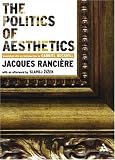
Ranciere describes modernism in Politics of Aesthetics "trying to make clear-cut distinctions in the complex configuration of the aesthetic regime of the arts."(p.25) The digital age brings about not-post-post-modernism, but hyper-modernism, an intensification of modernism's categorizing agenda. The apparent cross-disciplinarity of digital media only reveals the primacy of the state of the art over ancient artistic practice. The split-second calculation and correlation of minutely categorized facets of any phenomena, results in the illustion of cross-disciplinarity, it is, in fact, hyperdisciplinarity.

The state of the art is the military avant garde applied equally to foreign adversaries and civil society alike. Baisser la Garde, by introducing the figure of the soldier, human manifestation of the hegemonic structure of the state, asserting it's centrality to the creation of art, aims to bring in to relationship the schizophrenia of the contemporary state which wages unjust wars to promote humanist values. It is an acknowledgement of the mutual dependence, organic symbiosis of military and police hegemony in the service of protecting a space for the Humanist principles of the emancipation and flourishing of the individual to be performed. It is the manifestation of the given, assumed, and almost unspeakable unfree military precondition and ingredient of any cultural activity produced within its protective shell.
Baisser la Garde is also not about conventions of arts, it is not conservative, it is not guarding conservative traditions and values, it is incrementally, not too fast, almost imperceptibly, lowering the guard, it is exposing the weakness of the discourse, it is clogging the computer processor core with too much relevant information.
Geert Lovink asked "How to Undermine the Instant Globalization of Fear? Close our Eyes and Ears? Overcome Realtime Media? Dismantle the Collective Armors?" I answered "DDoS", but instead of the insistant repetitive message of conventional DDoS, I advocate to overload CPUs of society with relevant information.
The problem with information today is that it is increasingly digital, brute force, simplistic, goal-oriented, i.e. hypermodernist). What is relevant for the computation of society must be more broadly defined (if it must be defined at all). My artistic position is to strive for a luxurious information economy of inefficiencies, of frictions, collisions and encounters.
In this installation, the extraneous essential is factored in as a necessary precursor to the art work created in Germany today. We need protection here we need the hard shell, just as we need the hard strict rules of structural mechanics to hold up the walls around this space of freedom.

The exquisiteness of art depends on strict rules and on the freedom constrained by these. But 99% of the time, one is not straining, one is resting, preparing. This work suggests to redistribute our interest and appreciation for culture a little more evenly over the story of production. That the overblown colonial renommé given to that culture which purports to wish to destroy the constraints on the citizen, be appreciated on the level of that which emerges from within it. It is an aesthetics which accommodates tedium and surrender as being as necessary as the rarefying execution of hegemonic dominion.
The landscape painting on a canvas frame was once Avant Garde, then through modernism's rarefactions and abstractions we have an Avant Garde art of market systems. In world which promises a culture of creativity, every possible marginal identity: queer and transsexuals, Islam, Favella chic is quickly made Avant Garde. The Avant Garde is all about claiming new territory to be settled - in this way, Israel is very Avant Garde, training its army with the most advanced French (liberation) philosophy.
The Avant Garde creates a world on alert. The Avant Garde says "we forge ahead until the whole world is ours" only at the point of the complete domination of the world will this notion of Avant Garde become inactive, since the Avant Garde is an externally directed cultural policy. Thus the altruism on the Avant Garde agenda: they fight in order to become unnecessary. And this altruism is so central the need to become unnecessary is so urgent that the Avant Garde cannot but be perfunctory.
It is a double bind which, at the same time casts aspersions on the stated benevolence of the campaign. If the object is to colonize the world with our superior moral system, shouldn't this be accomplished with the maximum of certainty and care, if need be, at the expense of speed?
The reason that deceleraration of technological progress is a taboo subject is primarily an economic one. We must have economic growth at all costs because our economies are leveraged on debts which always threaten us to crush us under insurmountable accumulated interest.
Perfunctory avant gardes create shocks, disruptions in the society which are enormously profitable. Naomi Klein's The Shock Doctrine: The Rise of Disaster Capitalism reveals the fundemantally economic motivations for the overzealous Avant Garde: "disrumpere et impero!".
The reason that deceleraration of technological progress is a taboo subject is primarily an economic one. We must have economic growth at all costs because our economies are leveraged on debts which always threaten us to crush us under insurmountable accumulated interest.
Perfunctory avant gardes create shocks, disruptions in the society which are enormously profitable. Naomi Klein's The Shock Doctrine: The Rise of Disaster Capitalism
reveals the fundemantally economic motivations for the overzealous Avant Garde: "disrumpere et impero!".
We smirk and wink and needle the troops of hipster minions, cheeks flushed with youthful exuberance at their noble calling as they head out from the art schools into the airports and tv studios. The Avant Garde clears the way for a conventional life, so why must the Avant Garde claim to be so antithetical to convention? Conventional society and the Avant Garde are two parts of the same organism, symbiotic and sympathetic.
Though I share some of the agenda of the avant garde, (and with quantum computing, perhaps the inefficient computation I advocate above will produce the most mesmerizing and stultifying media ever) I wish to engage the denial of hegemonic necessity at its core, that which pretends to have no relation with the state or culture which it serves.
Our age is still one where cultures respect each other only when they confront each other with all weapons raised. This denial of hegemonic necessity allows every state to wage war in the name of its art. We need an integral model of an advanced society where the military/police regimented and instrumental hegemony and the freedom of the artist are elaborated in symbiosis.

As the sirens ring across the city today, the punks shout 'fuck the police', though the police are just as Avant Garde as they. The police are the Avant Garde of the life they live when they eat as opposed to that which they live when they think. il faudra Baisser la Garde!! If we are looking for a world of understanding and collaboration, it is enough Garde!! Baissons peu à peu, très minutieusement la garde!
The exhibition is still on at WOHNLABOR until May 15th, there will be two more artist talks there, next Saturday, the 8th and the following Saturday, the 15th each starting at 6pm.
Subscribe to:
Posts (Atom)


 Posts
Posts