iMine, the experimental art-app in a new Turkish version is presented as a site-specific installation using tape, posters, video, and found objects, at ISEA2011 Istanbul in the back court yard and ground floor of the NURU_ZIYA lounge in Tophane from September 14th until September 21st, 2011.
Le Laboratoire de Deberlinisation is presented and performed as part of the Global Art & the Musem (GAM) show opened Friday at ZKM in Karlsruhe. I made the videos, the 'speculative geography' maps of Africa, most of the other work is collaboration between myself and Mansour Ciss It will run until February 5th, 2012.
In the paper I will give next month at ISEA, I am exploring the oft-espoused notion that technology is neutral. My book Gratitude for Technology argues that every manufactured thing is a record of the life-times of the people who made it; that an archaeology of the surfaces of modernity is in order to articulate the real human relationships which produced them. Through this archaeology we must come to comprehensively acknowledge the legacy of these relationships, fair and unfair, respectful and exploitative, recorded in the surface.
Because the surface on which this text appears is technical material, and all technical material is a record of human relations, it cannot be neutral, because relationships are not neutral. I would not argue that these relationships are so many and infinitesimal that they 'even out' into a generalizable history. I want to be 'Infinitely Demanding' with Critchley, applying some of the highest Nouvelle Histoire ambitions of the 'Annales' school, and attempt to attend to each one of these minute fragments of real relationships coherently, in a sort of poly-biography, or anthropology of technology. I hope this will support my central contention that since the technical material is a prerequisite for anything which appears on it, the values recorded therein frame, shape and colour every experience of it. Finally I will claim that such effects are fathomable.
Vilém Flusser does not explicitly discuss the materiality of the digital surface, but he analyzes what he calls the 'technical image' as a projection from the level of code. He exhorts us to learn about how this written code functions to generate images, or else become enamoured of the digital image and mere subject to its power. He warns us not to delude ourselves about how much agency we actually have when we are imagine ourselves as 'being creative' with technical images.
"the first photographers had no idea what they were doing. They had no idea that it is the apparatus that takes the images. That the photographer is not necessary, that you can make automatic cameras, that it is so to speak technology, and science itself that makes images."1
1 from an interview, made in München, the 17th of October 1991. This written text is based on the edited tape entitled The Philosopher of Photography, broadcast by the Hungarian Television in May, 1992. (45 min, FRÍZ Production, directed by Miklós Peternák, András Sólyom, Producer: Judit Kopper)
I am just back from a wonderful few days in slightly, yet sweetly dilapidated Gijón where I installed the first public demonstration of iMine, a new experimental art-app for Android and iPhone.
What is iMine? It is digital art, in the particular sense that (as readers of other articles on this site will know) explores the materiality of the digital. This app, and the associated web resources is designed as a sort of portal to vast realms of real and possible research into the real material conditions of the origin of digital media, that is, in the material of the hardware which has its genesis in the minerals of the earth. This is accomplished through a game interface, which is itself a dramatization of these conditions.
iMine ventures back to the humble and often primitive conditions where the minerals which will become this technology are originally exhumed. It is an assertion of the human facts at the mine head, the actual workers who actually laboured to bring forth the minerals which frazzle and fritz inside circuits and chips to maintain this text so seamlessly legible on the surface of your display right now.
"It has been clear for several centuries now that, if we want to understand the world, it is not sufficient to describe it by words, it is necessary to calculate the world. "
- Vilém Flusser (from a soon-to-be-released DVD of interviews with Miklós Peternák)
Our age is lauded for the unprecedented modes of social functionality enabled by new technologies, especially by the internet. This appears to be the realization of egalitarian Enlightenment humanist aspiration, embodied in many of the so-called Universal Human Rights. This is an egalitarianism of info-beings predicated on the de-emphasis of materiality.
Material bodies are not equal, but minds, at least, can generate such generalizing agendas. We don't hear from the UNCF that "A body is a terrible thing to waste", a body is a necessary evil. Increasingly, our age is one of a spiritual human collusion of minds, released from the fleshy shells in which they gestate. The body is becoming extensible, replaceable, expendable, redundant. All technology points to a future of the prevalence of the mind over the materiality of the body.
Of course, as McLuhan observed, as one technology becomes obsolete, society generates reactionary cultural forms. The artists, as usual, are the most sensitive to this. Stelarc & Orlan began announcing the obsolescence of the conventional figure of human form decades ago, this has since become almost mainstream. For these artists, their bodies, far from being irrelevant to their social presence, become central, this is also increasingly the case for pornographic actors, vanguard subjects of body transformation. As most of us lead increasingly discorporate social lives, our body culture becomes ever more cliinical and artificial.
The social forms generated by discorporating bodies seem unprecedented, but they are not. This is evident in how political discourse has revealed its true impotence. Vilém Flusser, at the dawn of the PC-age, warned about the coming age of electro-idolatric society. "Thinking is anti-image" he warned, the rule of images will not bring about democracy, but a new form of magical terror. A society in the thrall of the magical power of images.
The only antidote to this, according to Flusser, would be politics, based in the rational, linear processes of text. Text makes historical consciousness which is directed against the image. But the problem today is that electronic text is every bit an image as is an image. Projected from data into text-like manifestations on the screen, the text is not text in a classic sense, but electromagnetic data, which could manifested as easily as a sound or an image or a movie.
this blog post as an image
This text is an image projected by computing, cycling machines. This text is 'kept alive' on the screen at the rate of your local electrical current (50 or 60 times a second, but recently, parallel processes can multiply this). All the exciting new ways we can interact and contact eachother today are so much spontaneous swirls and algorithmic fractals, projected on beguilingly luminescent material, bound in the minerals and metals of satellites and cables, the exotic alloys of the circuit-boards and chips, as much as the tables and toilets of the factories where these were assembled with such precision, the wells and rivers which washed and wet them.
And all along the material course from gravity-sodden earth to speed-of-light peta-flop circuit, is a choreography of human bodies writhing back through history, single file and cavalcade, rhythmically and momentarily themselves — this reality of technology is flesh, bone, muscle and blood of human beings with feelings and needs throughout history.
There is a common industrial history to the text on this screen and the clothes on your back and the fibers of your seat — and here we have a possible reversal: now that text is, itself, an image. Technical images, products of textual codes, may still provide something to fulfill the political role of text.
In this sketch from Kommunikologie, Flusser attempts to systematise his theory of meaning. In the diagram, the image alienates people and engenders in them magical consciousness, text, alienates from the thrall of images and engenders historical or political consciousness, and he is not yet clear what is engendered by the techno-image. At the end of his chapter "How the codes function", where this diagram appears, he indicates two (although not mutually exclusive) possibilities.
The first, as I mentioned before, is that we will enter into a new magical era dominated by the image, what one might call a techno-magical era, in which Flusser seems to encounter Virilio in describing as mania, madness "Wahnsinn". The second possibility is that we somehow discover how to understand the codes of the techno-images. "Eine Möglichkeit ist, in einer bedeutungslos werdenden, sich nunmehr sich selbst bedeutenden kodifizierten Welt ein sinnloses Leben zu führen. Das ist die Zukünft als Totalitarismus. Díe Alternative dazu besteht darin, die Codes des Technobilder in der Griff zu bekommen und gemeinsam eine neue Art von Bedeutung zu projizieren." (Kommunikologie, p.110) "One possibility is to live a meaningless life in an increasingly meaningless codified world, which, from now on, has meaning only of itself. This is the future as totalitarianism. The alternatives depend on us coming to terms with (literally gettinga handle on) the codes of the techno-images and together thereby projecting a new type of meaning."(my translation)
Flusser does not consider the techno-image an image in the classic sense, he considers it a 'project' projected from inside the technology. Thus, when he refers here to projecting new meaning, he is speaking of accomplishing this with the techno-images. The notion of meaning here is clearly Enlightenment Humanist, and the emancipation of the human spirit from the totalitatrianism of the techno-image is an imperative only possible through operations on the level of code.
"Entweder wir leben in den undurchdringlichen Wänden bedeutungsloser Bilder oder machen aus diesen Bilder Brücken zur Welt. " (ibid, p.110) "Either we live in (sic) the impermeable walls of meaningless images, or we make, out of these images, bridges to the world"(my translation)
Here Flusser closes with the hope that the techno-image can lead us back to knowledge in the world. Paradoxically the techno-image is our greatest threat and only tool to escape this threat.
Flusser says, in a soon-to-be-released (now released!) interview with Miklós Peternak at the Osnabrück New Media Festival in 1988, "I am impressed by the fact that one of the most important dimensions of the present cultural revolution, linguistic communication, both the spoken and the written word, are no longer capable of transmitting the thoughts and concepts which we have concerning the world..it is my firm belief, that if you want to have a clear and distinct communication of your concepts, you have to use synthetic images, no longer words."
We must not only use synthetic or techno-images to communicate about the world, computer-based images (and by this I also mean text, video and audio) are the only possible means we have to communicate meaningfully today about images. If fact, it is at the image level itself that we can best start our discourse, a discourse into the persistent materiality of the techno-image.
History is made today, not at the level of text, but at the level of techno-images beholden to computer codes, which are bound in, and the historical documents of, globalized industrial processes. The reality of these processes, which is the reality of the material manifestation of this text on your screen right now, such as it is, is the true political reality of this age. A reality only modellable and navigable by figures of computation.
Gratitude in etymology (Derrida cautions about this "abuse of etymology that serves as explanation, play on homonyms (he should know about this one), privileging of nomination, autonomization of language, and so forth"- Specters of Marx, p. 167)
gratitude c.1500, from M.L. gratitudo "thankfulness," from L. gratus "thankful, pleasing" (see grace).
grace from L. gratia "pleasing quality, good will, gratitude," from gratus "pleasing, agreeable," from PIE base *gwer- "to praise, welcome" (cf. Skt. grnati "sings, praises, announces," Lith. giriu "to praise, celebrate," Avestan gar- "to praise").
In this book I wish to create a manifestation of the legacy of human care and effort that coalesces in the contemporary surface. This manifestation, of the intricate webs of human relations intertwining back through history, all the way to the flint knife and before, is proposed to be a media object, a digital media modeling of documentary/historical traces, that should serve as contemplative resonator for gratitude for technology.
Rather than being an object of our contemplation it is a Flusserian project projected from processes inside the apparatus which is modeling the history of human collaboration recorded in the document of the contemporary surface. This work requires an infinite labour:
of research, to compile records towards a comprehensive documentary legacy of the human history of technology,
of mimetics, to re-enact and reembody all the events of this legacy
of modeling, developing categorization and cross-referencing protocols and the algorithms to traverse these, creating recombinant documentary sequences and inter-associations with intuitive subjective sense of perspective and movement..
My friend Steven Augustine has challenged my use of the notion of gratitude as implicitly religious. Seeing as even the secular humanist modernist tradition is redolent of judeo-christian learning, this charge is hard to defuse. Without god, utterly without god, we really only have each other, and we will have to start dealing with that fact with the earnestness it deserves.
*
Today, while editing, I heard a scratchy squeaky rhythmic something coming from the park beneath my window. There were a few young voices obviously enjoying this racket very much. I finally figured out that it was
“Das Geht ab” (it’s starting) by Frauenartz (Gynecologist) and Manny Mark coming out of a cellphone speaker. I thought about what I was doing, trying to make something sublime, but the cell-phone makers know just what functionality the kids need. Kids today, as back when I was, are desperate for anything that will give them hope that this technological future world will be worth it.
People are grateful for technology which transports them, away from their bodily and existential uncertainty into a fantasy space where everything responds to them, and offers them an intoxicating taste of complete control. We suspend ever longer this technological fantasy through drugs , through media, it seems the future will be one where people will be transported from cradle to grave without ever having a moment unmediated by technology. There will be no slowing down of technology no crisis just an ever surging yearning thrust towards fusion with automated processes.
Research for my current work "a PEotST" and its upcoming manifestation in Ji Yoon Yang's radical new exhibition project "NOW WHAT" has lead me deep in to Derrida's Specters of Marx: The State of the Debt, The Work of Mourning & the New International which, I have found, much to my humbling satisfaction, has not only a beautifully written thesis, but also several direct points of confluence with Gratitude for Technology and "a PEotST". I started here with some ideas about the notion of justice and I hope to follow up in the near future with a post on the notion of the specter.
"The Electronic Revolution has not yet found its Marx" wrote Wolfgang Schirmacher in his prescient article "Net-world from the inside" in 1997, but what Marx could the current 'revolution' possibly require?
At the dawn of the age of Quantum Computing and the exponential acceleration and miniaturization of many of the essential industrial processes on which our daily life is based, it is clear that the social-critical position customarily embodied in the left, seems to have reached an impasse. What is left of the left today but a resistant force to the propulsive force of capitalist progress? Would the death of the Socialist Party in France, as envisaged by Bernard-Henri-Lévy herald the emergence of a radically more effective form of political mobilization for social justice?
Indeed even the viability of the notion of a party, of party politics itself is being held up for re-evaluation. "Now, as one can see foreshadowed, it seems, everywhere in the world today, the structure of the party is becoming not only more and more suspect(and for reasons that are no longer always, necessarily, "reactionary", those of the classical individualist reaction) but also radically unadapted to the new - tele-techno-media - conditions of public space, of political life, of democracy, and of new modes-or representation,( both parliamentary and non-parliamentary) that they call up." Derrida writes in "Specters of Marx", powerfully problematizing the state-party relation which has dominated global politics for the last 200 years.
"...liberal democracies, constitutional Monarchies, Nazi, fascist or Soviet totalitarianisms. Not one of these regimes was possible without what could be called the axiomatics of the Party. "(p.127)
Central to Derrida's meditations in the book is the notion of justice, justice, which he offsets, in his accustomed punny methodology with the notion of justness, justesse correct- or exactness (de justesse means just barely) approaching with the engineer's ruler the infinitesimal convergence-point of truth, to which any application of justice must ascribe.
"Specters of Marx" is a radical text, more radical than Marx alone could be today and too radical for Derrida to imagine writing while the Iron Curtain still divided the world in two. I was startled to see we make a similar call for a thoroughgoing, indiscriminate and nonjudgmental reckoning and acknowledgment of the 'whole truth' of a given political manifestation, integrating illegal, black/grey market and otherwise prohibited-though-persistent sex and drugs, body parts and slave dealing modes of social organization active in every society.
"How can one ignore the growing and undelimitable, that is, worldwide power of those super-efficient and properly capitalist phantom-States that are the mafia and drug cartels on every continent, including the former so-called socialist States of Eastern Europe? These phantom-States have infiltrated and banalized themselves everywhere, to the point that they can no longer be strictly identified. Nor even sometimes clearly dissociated from the processes of democritization (think—for example—of the schema, telegraphically simplified here, that would associate them with the history-of-a-Sicilian-mafia-harrassed-by-the-fascism-of-the-Mussolinian-State-thus-intimately-and-symbiotically-allied-to-the-Allies-in-the-democratic-camp-on-both-sides-of-the-Atlantic-as-well-as-in-the-reconstruction-of-the-Italian-Christian-democratic-State-which-has-today-entered-into-a-new-configuration-of-capital, about which, the least on can say is that we will understand nothing of what is happening if we do not take account of that genealogy). All these infiltrations are going through a "critical" phase, as one says, which is no doubt what allows us to talk about them or to begin their analysis. These phantom-States invade not only the socio-economic fabric, the general circulation of capital, but also statist and inter-statist institutions."
(p.103 my emphasis).
Whereas the politics in "Gratitude for Technology" is grounded in a material-economic understanding, Derrida's is polemic and prophetic. In the Communist Manifesto there is always the problem of the persistence of an intellectual elite layer in what should be a completely egalitarian paradigm: that of the Communists who serve the function of the guiding imagination of the proletariat "The Communists, therefore, are on the one hand practically, the most advanced and resolute section of the working-class parties of every country, that section which pushes forward all others; on the other hand, theoretically, they have over the great mass of the proletariat the advantage of clearly understanding the lines of march, the conditions, and the ultimate general results of the proletarian movement." (C.M. II(2)) Even in Derrida's New International, we must assume a judgmental intellectual hegemony as a moderating and visionary force leading the world toward justness. Since this campaign will not be consummated in the foreseeable future, what we need (to be satisfied with) are (operating) principles.
Only through embracing and understanding the complexities of our current age can we hope to cultivate satisfying activities which will hearten us and engage us as in a world of economic production under just conditions (as opposed to the current regime of "maximum profits (and/)or bust"). The New International hopes to supplant or supplement earlier teachings, rituals, strategies, such as those of the Bible scriptures and church service, with more prosaic ones which call citizens to actively engage with and question their own reality. The Specters of Marx, thus regularly confronted and encountered, would seem to necessitate an institutionalized scholarly rigour in a mode akin to that of the Chassidim or other orthodox faithful who regurgitate to re-metabolize their scripture at every social juncture.
The prospects seem dim for the cultivation of what would be the requisite appetite of 'learning for society's sake' among the general populations of our contemporary states where education is merely one of the many discouraging processes necessary for the formation of the contemporary political subject, indoctrinating, assimilating and domesticating the pupil, stripping it of its confidence and of its just conviction.
My new book on Atropos Press "Gratitude for Technology" has started appearing on online booksellers today! Barnes & Noble was the first, so I am linking to them, Amazon should come online soon.
The book is the result of about two years of work trying to articulate the radical premise of my media art: in order to access more meaning in the technological surfaces all around us, we need to engage with the physical material of that surface, and trace back the historical processes of how it came into being.
If we look carefully, we will see that inside every technological surface are matrices of human relationships stretching back through history. These matrices of related activity formed the materials of the earth into the technological surface. If we can somehow find a way to model and manifest these webs of relationships, this utterly human cosmology, (we may need some quantum mathematics!) we will have something which we can use to develop a more substantial connection between our selves and the technological surface.
I access a wide variety of sources to explore my argument, philosophy, art, design, performance, science, contemplating the historical value of labour and the origin and structures of meaning. and more. I am very excited to finally put into book form many of the concerns that have been going on in, and unify my work since my feature film "Proposal for Dog Brain" was completed in 1995.
Now, as I start promoting this book, I have begun preliminary editing on the first installment of my video-performance series "A Political Economy of the Smallest Things" starring Paul Virilio and Otto Rössler and yours truly. This takes the themes from (especially the last chapter of) "Gratitude for Technology" even further into the infinitesimal production of leptons and bosons at CERN near Geneva. I will upload some short clips shortly, until then, please leave a comment and say hello!
A Comprehensive Approach to Congo’s Conflict Minerals
Read this pdf from Enough! An American initiative to end genocide and atrocities. It is not perfect, and these things seem to obligatorily smack of neo-colonialism at times, but there is a lot of good information and an occaisional very strong statements, such as:
"... consumers and their elected representatives have the opportunity to decisively alter the dynamics of conflict in the Great Lakes Region by finally focusing international attention on the economic drivers of this human rights catastrophe. By demanding transparency and accountability from the world’s largest electronics companies, consumers can fundamentally change the logic of Congo’s conflict and end the scourge of conflict minerals."
Summerlab Showcase Catalog
with a short feature on iMine and an article I wrote on mobile art, in English y Castellano
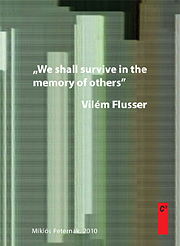
New Flusser DVD out
with subtitles in 7 languages, much quoted in this blog
Process as Paradigm
new catalogue for an show on processual art at LABoral in Gijon, Spain. My text istarts on page 123
The copyrights in all the material, images, texts, hypertext, held in this blog are owned by the author. Material in these pages is not freely distributable by electronic or any other means and may not be archived for distribution by anyone without the explicit consent of the author.
Readers are specifically granted the following rights in respect of this material: To read online or download and store digital copies for their own private use only. To print paper copies for their own private use only. No other rights are granted.

 : iMine and le Laboratoire de Deberlinisation.


 ' with Critchley, applying some of the highest


 , p.110)
 , p. 167)
 and



 Posts